
Look, I get it. When you think Portugal, your mind probably jumps straight to Lisbon’s colorful trams or Porto’s port wine cellars. And honestly? Those cities are absolutely worth the hype. But here’s the thing – Portugal has so much more to offer once you venture beyond the obvious choices.
After spending way too much time researching (and daydreaming about) Portuguese getaways, I’ve discovered some seriously charming cities that deserve a spot on your itinerary. These places have all the Portuguese magic you’re craving – think cobblestone streets, incredible food, and that laid-back vibe – without the tourist crowds fighting for the perfect Instagram shot.
Ready to discover the Portugal that locals actually want to keep secret? Let’s dive in.
Aveiro: Portugal’s Answer to Venice (But Better)
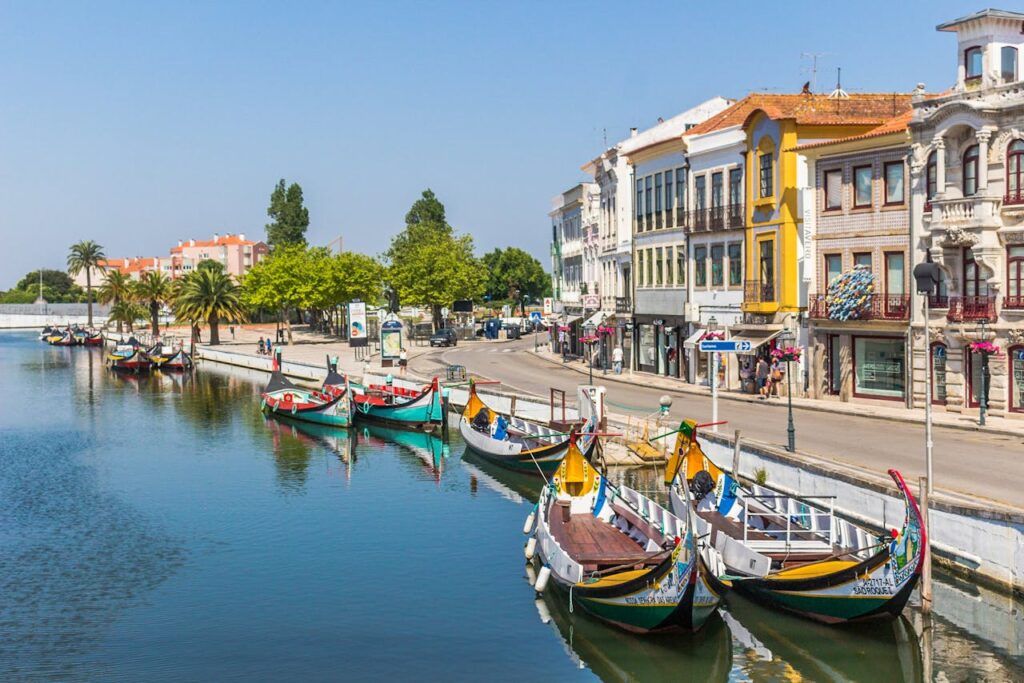
If someone told me there was a “Venice of Portugal,” I’d probably roll my eyes and expect some watered-down tourist trap. But Aveiro? This place genuinely surprised me. Yes, there are canals, but they’re lined with Art Nouveau buildings painted in the most gorgeous pastels you’ve ever seen.
The real stars here are the moliceiro boats – these brightly painted gondola-like vessels that cruise through the canals. Originally used for harvesting seaweed (glamorous, right?), they’re now perfect for a leisurely tour where you can actually hear yourself think.
Don’t miss: The ovos moles – these sweet egg yolk treats wrapped in delicate pastry shells. They’re basically edible sunshine, and you’ll understand why locals guard the recipe so fiercely.
Getting there: Just over an hour by train from Porto (€3.80), making it perfect for a day trip or weekend escape.
Coimbra: Where Students and History Collide
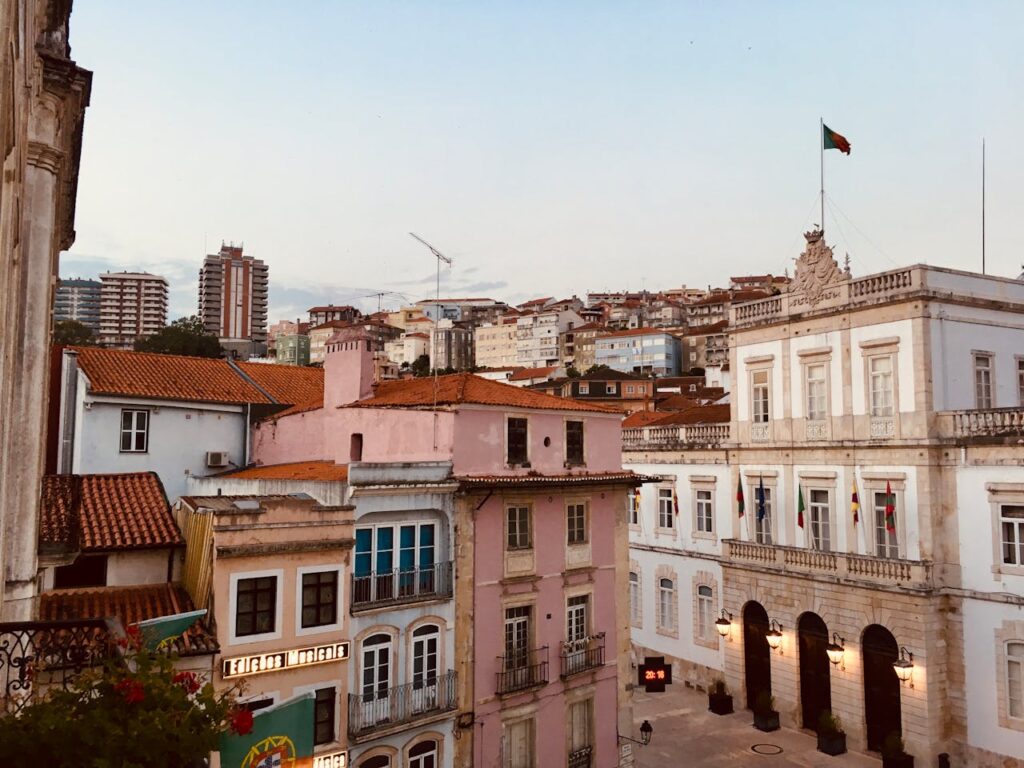
There’s something magical about a city where 13th-century architecture mingles with the energy of thousands of university students. Coimbra is home to Portugal’s oldest university, and you can feel that academic buzz everywhere you go.
The Biblioteca Joanina is worth the trip alone – imagine Harry Potter’s library, but baroque and covered in gold. The shelves hold over 300,000 volumes, and here’s a fun fact: they actually keep bats in the library to eat insects that might damage the books. How’s that for natural pest control?
But what really gets me about Coimbra is the fado. This isn’t the touristy fado you’ll find in Lisbon’s restaurants. Here, it’s student fado – raw, emotional, and traditionally performed by university students in black capes. It’s hauntingly beautiful in a way that gives you actual chills.
Pro tip: Come during the academic year (September to July) when the city pulses with student life, or visit in summer for a quieter, more contemplative experience.
Braga: The Rome of Portugal (Without the Crowds)
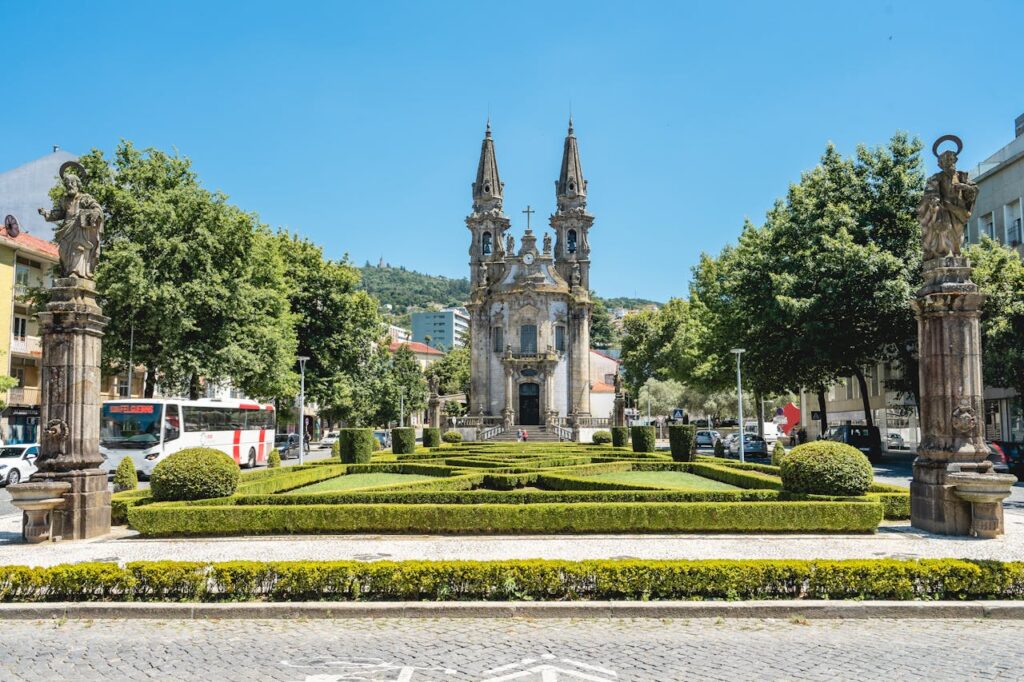
Braga might call itself the “Rome of Portugal,” but honestly, it’s got way more personality than that nickname suggests. This city wears its 2,000+ years of history lightly, mixing ancient Roman sites with buzzing cafes and a surprisingly vibrant nightlife scene.
The absolute must-see is Bom Jesus do Monte – a hilltop sanctuary that’ll make your jaw drop. The baroque staircase leading up to the church is decorated with fountains and sculptures, and if you’re feeling lazy (or smart), you can take the 19th-century funicular that still runs on a water counterweight system.
What I love about Braga is how it feels authentically Portuguese. You’ll see more locals than tourists, prices are refreshingly reasonable, and the restaurant servers actually seem happy to see you rather than just tolerating your presence.
Local secret: The historic center comes alive at night, especially around Largo da Sé. Grab a table outside one of the wine bars and watch the city transform from sleepy historic town to lively social hub.
Évora: Medieval Magic in the Alentejo
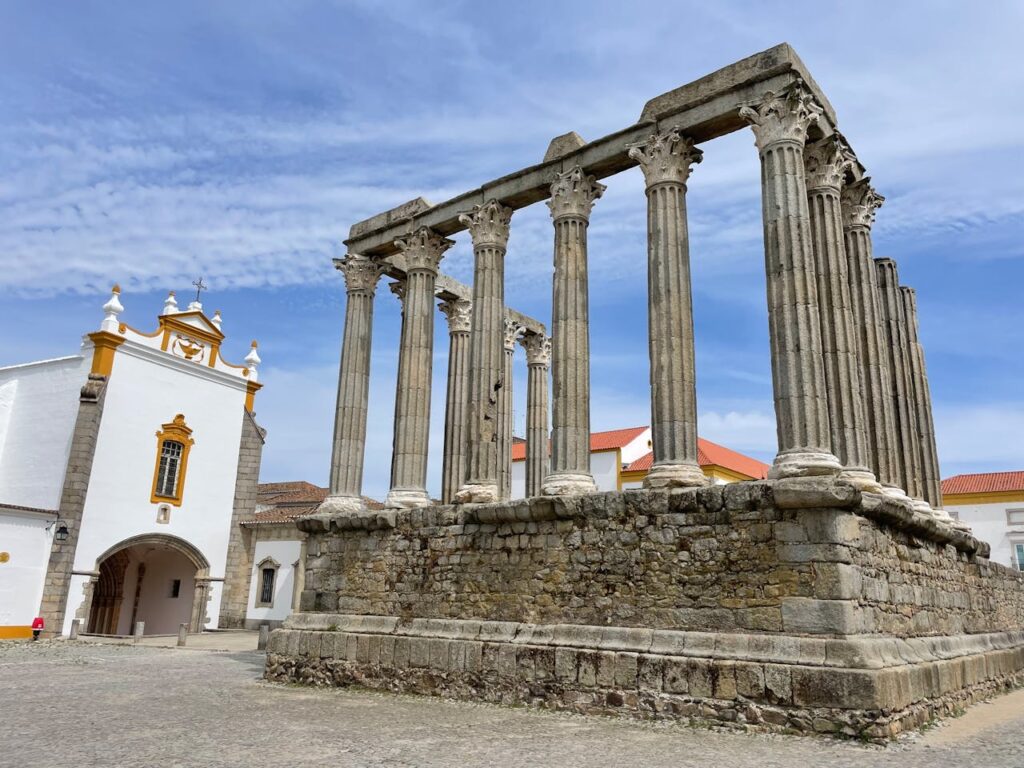
If you’ve ever wanted to step inside a medieval fairy tale, Évora is your place. This UNESCO World Heritage city sits in the heart of the Alentejo region, surrounded by rolling hills dotted with cork oaks and vineyards that stretch to the horizon.
The Roman Temple is impressive enough, but the real showstopper is the Chapel of Bones (Capela dos Ossos). Before you ask – yes, it’s exactly what it sounds like. The walls are lined with human skulls and bones, arranged in surprisingly artistic patterns. Morbid? Maybe. Fascinating? Absolutely.
But Évora isn’t all about ancient history. The Alentejo region produces some of Portugal’s best wines, and the restaurants here serve up traditional dishes that’ll ruin you for chain restaurants forever. Think slow-cooked lamb, local cheeses, and bread that’s been made the same way for centuries.
Planning tip: Use Évora as your base for exploring the Alentejo region. Rent a car and spend your days wine tasting and your evenings wandering the perfectly preserved medieval streets.
Guimarães: The Birthplace of Portugal
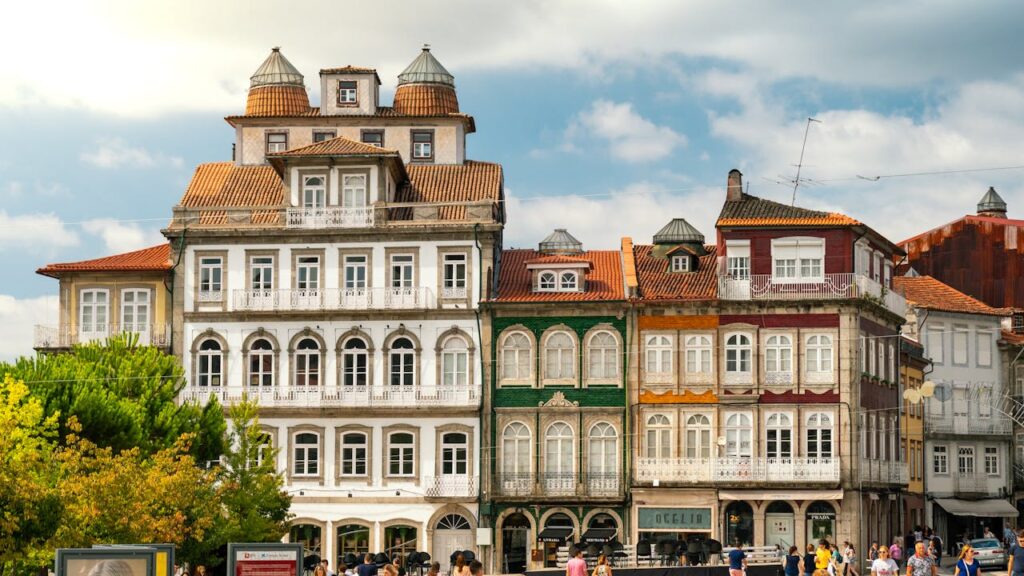
There’s something deeply satisfying about visiting the place where an entire country began. Guimarães proudly claims the title “Birthplace of Portugal,” and after wandering through its perfectly preserved medieval center, you’ll understand why it’s a UNESCO World Heritage site.
The historic center feels like a movie set – narrow cobblestone streets, traditional architecture, and squares that haven’t changed much since the Middle Ages. The castle where Portugal’s first king was supposedly born still stands guard over the city, and climbing up there gives you views that’ll make you understand why someone decided to build a country here.
What makes Guimarães special isn’t just the history, though. It’s how the city has managed to stay vibrant and relevant. The European Capital of Culture designation brought new energy, and now you’ll find contemporary art galleries nestled between ancient buildings and modern cafes serving traditional pastries.
Don’t miss: The Palace of the Dukes of Braganza – it’s like stepping into a medieval Netflix series, but with better lighting and no dramatic deaths (that we know of).
Óbidos: A Medieval Town Wrapped in Walls

Okay, so Óbidos is technically more of a town than a city, but trust me on this one. When you approach this place and see the medieval walls rising from the countryside, you’ll forgive me for bending the rules a little.
The entire historic center is enclosed within 14th-century walls that you can actually walk along. It’s like having your own private castle tour, except you’re strolling above red-tiled rooftops instead of fighting off invading armies.
The streets inside are impossibly narrow and lined with white houses trimmed in blue and yellow. Every corner looks like it was designed for Instagram, but somehow it never feels artificial or touristy. Maybe it’s because locals actually live here, or maybe it’s the way the light filters through the narrow streets – either way, it works.
Local treat: Ginjinha de Óbidos – a cherry liqueur served in edible chocolate cups. It sounds gimmicky, but it’s actually delicious and has been a local tradition for decades.
Tomar: Templar Knights and Riverside Charm

Tomar might be smaller than the other cities on this list, but it packs a serious historical punch. This was the last stronghold of the Knights Templar in Portugal, and the Convent of Christ (Convento de Cristo) is a UNESCO site that’ll blow your mind with its mix of architectural styles spanning several centuries.
The convent complex is massive – you could easily spend half a day exploring the different chapels, cloisters, and chambers. The famous Manueline window in the Chapter House is considered one of the finest examples of Portuguese decorative art, and honestly, the detail work is insane.
But Tomar isn’t just about the Templars. The old town spreads along the Nabão River, with tree-lined streets perfect for afternoon strolls and riverside cafes where you can watch the world go by at proper Portuguese pace.
Festival alert: If you can time your visit for the Festa dos Tabuleiros (Festival of Trays), held every four years, you’re in for something truly special. It’s a tradition dating back centuries that’s unlike anything else in Portugal.
Why These Cities Beat the Tourist Trail
Here’s what I love about all these places: they give you authentic Portuguese experiences without the hassle of fighting crowds or paying inflated tourist prices. You’ll hear more Portuguese than English on the streets, restaurant menus aren’t translated into five languages, and locals treat you like a welcome guest rather than a walking wallet.
The food is better too, because restaurants are cooking for locals who know what good Portuguese food should taste like. You’ll find family-run tascas serving dishes that have been perfected over generations, not adapted for international palates.
And the pace? It’s gloriously, beautifully slow. These cities operate on Portuguese time, where lunch can stretch for two hours and nobody seems stressed about it. It’s the kind of travel experience that actually leaves you feeling relaxed instead of needing another vacation to recover.
Making It Happen: Practical Tips
Best time to visit: Spring (April-May) and early fall (September-October) give you perfect weather without summer crowds. Plus, everything’s cheaper.
Getting around: Portugal’s train system connects most of these cities efficiently and affordably. For maximum flexibility, especially in the Alentejo region around Évora, consider renting a car.
How long to stay: Each city deserves at least a full day, but 2-3 days lets you really soak in the atmosphere and explore the surrounding areas.
Language: English isn’t as widely spoken as in Lisbon or Porto, but Portuguese people are incredibly patient and helpful. Download Google Translate, learn a few basic phrases, and embrace the adventure.
The Bottom Line
Portugal’s smaller cities offer something that even the most beautiful major destinations can’t: the feeling that you’re discovering something special rather than just checking boxes on a tourist itinerary. They’re places where you can wander without a plan, strike up conversations with locals, and stumble upon experiences that’ll become your favorite travel memories.
So next time someone asks about Portugal, sure, mention Lisbon and Porto. But then tell them about the real magic – the cities where Portugal reveals its soul to travelers curious enough to look beyond the obvious choices. Trust me, once you experience the authentic charm of places like Aveiro or Évora, you’ll understand why some secrets are worth sharing.